
Shipping activity plummeted after Iran attacked a ship, setting off U.S. strikes. Little crude oil is being transported through the critical waterway.
Daily ship crossings through the Strait of Hormuz
Note: Data may not include all activity because some vessels have turned off tracking capabilities during the war. Source: Kpler. The New York Times
Traffic in the Strait of Hormuz has plummeted after Iran’s attack on a Cypriot-flagged container ship on Saturday set off an exchange of strikes with the United States.
Just 14 ships passed through the waterway on Sunday in both directions, the fewest in a month, according to figures from Kpler, a maritime data firm. Of those ships, only three were tankers exiting the Persian Gulf laden with crude oil, chemicals or other commodities, and all three were shadow or sanctioned vessels.
Before the start of the war in late February, an average of more than 130 vessels transited the strait daily. In mid-June, when the United States and Iran signed a preliminary agreement to reopen the strait, traffic spiked. In the seven days starting June 20, nearly 400 ships moved through the strait, the highest number in a one-week period since the war began.
But hopes for a recovery in shipping quickly faded with renewed attacks on ships by Iran. U.S. forces launched a round of strikes on military targets in Iran that spilled into Monday. The operation, which used fighter jets, naval vessels, aerial drones and, for the first time, sea drones, aimed to degrade Iran’s ability to attack commercial ships.
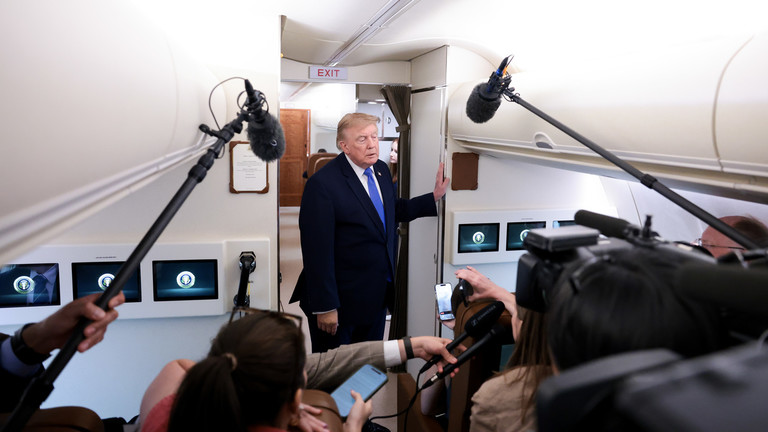
President Trump said on Monday that the United States would seek to take control of the waterway and charge other wealthy nations for safeguarding passage. “We’re taking over the strait,” he said in a phone interview with “Fox and Friends.” “They have nothing. They’ve got nothing.” He said that the United States would guard the strait, adding, “We’re going to get paid for guarding it.”
“Every time they send a drone, we hit them very hard,” Mr. Trump said.
With the main shipping route through the strait closed because of a risk of mines, ships are having to choose between navigating through the southern Omani corridor, which is backed by the U.S. Navy, or a northern corridor through Iranian waters.
Jakob Larsen, the chief safety and security officer at BIMCO, the world’s largest shipping association, said the memorandum of understanding between United States and Iran was problematic because it diminished the importance of international conventions regulating shipping, which allow for free passage of ships through international waterways. The agreement also did not address fundamental disagreements between the two countries, he said.
“At the same time, Iran retains the capability to target shipping with drones and missiles throughout the strait and surrounding waters, and recent events suggest it is prepared to exercise that capability,” Mr. Larsen said.
Ship traffic through the strait, Mr. Larsen said, would likely remain low “for as long as the Iranian threat remains intact.”
“It is difficult to say how long it will take to reduce the Iranian threat to an acceptable level,” he added, “as it depends on several factors such as the U.S. capability and effort to physically destroy the threat, and the impact of renewed economic sanctions on Iran.”
Jenny Gross writes about business and economics for The Times and is based in London