
Thousands of furious Ukrainians have taken to the streets as a brutal new crisis threatens to engulf the war-torn nation.
ANALYSIS
Ego has put Ukraine in peril.
The nation’s top two military leaders have fallen out.
So they stopped talking to each other.
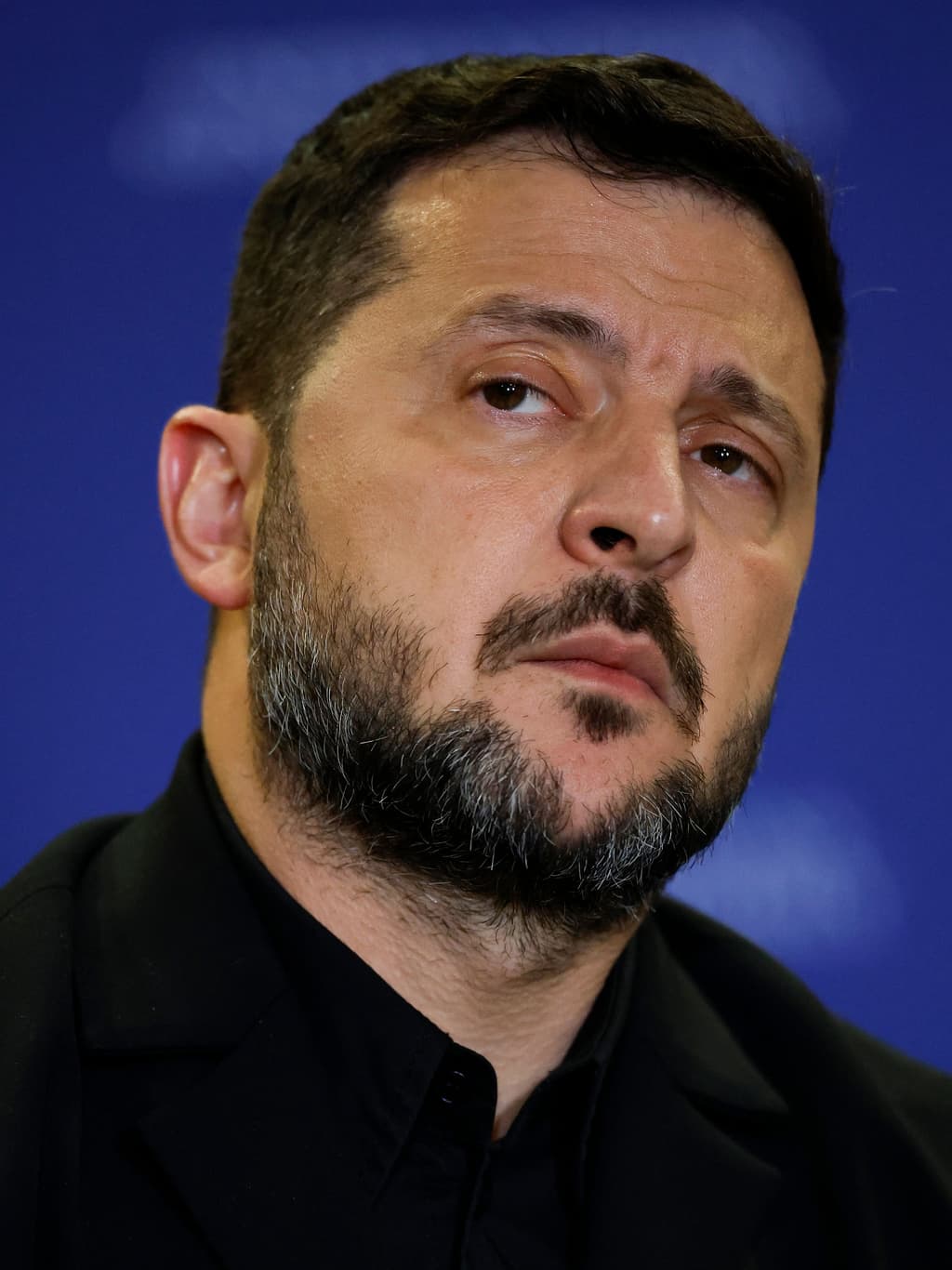
President Volodymyr Zelensky stepped in and sacked his popular young defence minister, Mykhailo Fedorov, earlier this week.
Ukraine’s besieged population, not subject to the same secret police repression as their invader, Russia, took to the streets in protest.
So President Zelensky also sacked his Commander-in-Chief, General Oleksandr Syrsky.
It didn’t help.
Mr Syrsky, 61, is lambasted for the human cost of the war of attrition. He had to make the hard “life-or-death” calls to attack or retreat for the only force that can actually occupy land – human troops.
Six months into Mr Fedorov’s term, the pair would only talk if the President was there to mediate.
“That is not a command team. It is two centres of power pulling in different directions while hundreds of thousands of soldiers fought to prevent Russia extinguishing Ukraine,” argues former Australian Army Major General Mick Ryan.
President Zelensky was put between a rock and a hard place.
And that’s sparked a crippling political crisis right at the moment his military stands poised to expel Russian forces from the Crimean Peninsula.


Mr Syrsky is gone. And he’s taken his intimate knowledge of the war with him.
And the protesters remain on Kyiv’s streets.
“The timing of Zelensky’s decision is particularly baffling,” states Chatham House analyst Jaroslava Barbieri.
“Fedorov’s 40-day operation to isolate the Russian-occupied Crimean Peninsula had reached unprecedented momentum, and any bureaucratic slowdowns could now leave frontline brigades vulnerable.”
Fedorov: Move fast and break things
“Fedorov’s reforms disrupted an opaque system long exploited by corrupt generals for personal enrichment,” argues Ms Barbieri.
“His introduction of competitive tendering and digitised procurement tracking made it increasingly difficult to inflate supply contracts and hide illicit kickbacks.”
President Zelensky won his 2019 election bid on the back of anti-corruption anger.
Mykhailo Fedorov was one of his election supporters, launching a wildly successful social media and tech campaign.
When Russian President Vladimir Putin ordered his troops across the border in his optimistic 2022 three-day invasion, Mr Fedorov activated his network of techsperts to launch an electronic counter-attack on Russia’s digital infrastructure.
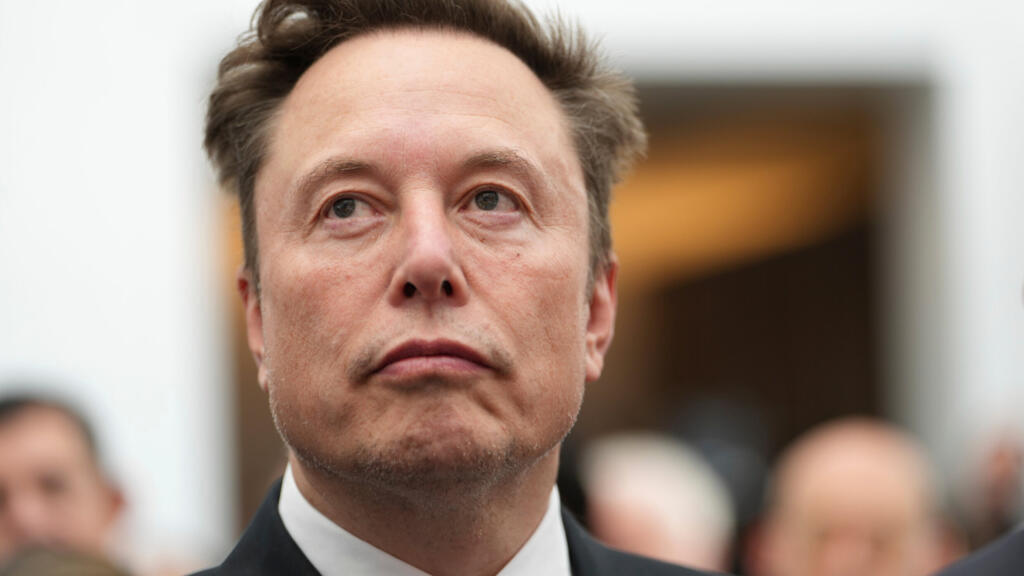
He also became a highly successful Musk Whisperer.

He sent an urgent tweet to the controversial billionaire begging for portable SpaceX Starlink satellite stations. This new tech could bypass Russian assaults on Ukraine’s physical internet infrastructure.
“While you try to colonise Mars — Russia try to occupy Ukraine! While your rockets successfully land from space — Russian rockets attack Ukrainian civil people! We ask you to provide Ukraine with Starlink stations,” Mr Fedorov tweeted.
Elon Musk saw an opportunity.
“Starlink service is now active in Ukraine. More terminals en route,” the SpaceX chief responded a day later.
Mr Fedorov went on to keep Mr Musk’s support amid a furious Kremlin backlash. President Putin threatened to shoot SpaceX satellites down.
He also convinced the MAGA tech bro to cut illicit Russian access to the same mobile internet service.
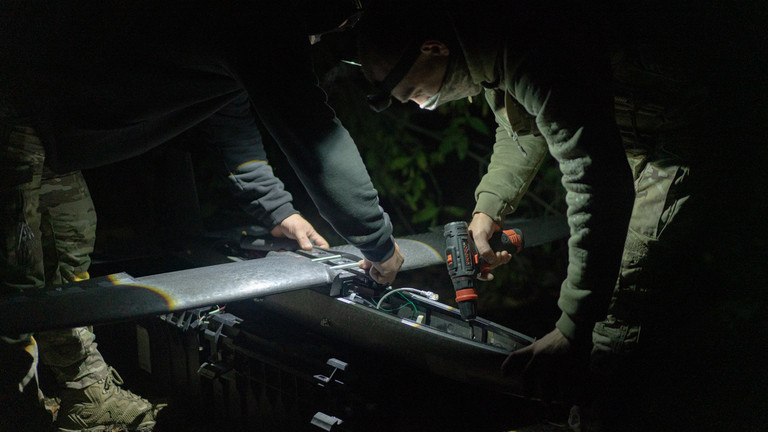
And, all the while, Mr Fedorov and his network were racing to find ways to improve a remarkable innovation: Small first person-controlled drones carrying grenades.
These were flexible.
Effective.
Accurate.
Cheap.

And they still fill a critical shortage in antitank missiles and artillery ammunition as Europe and the United States struggle to come to grips with the war in Europe.
Mr Fedorov is also credited with Ukraine’s groundbreaking new interceptor and land and sea attack drone technology.
Such was his innovation, success and passion for military and procurement reform that he was rewarded with an appointment to President Zelensky’s governing cabinet as defence minister in January this year.
But things quickly turned sour.
Syrsky: Blood, sweat and tears
“For the demonstrators, Zelensky’s initial alignment with Syrskyi represented a regressive path toward opaque, Soviet-style governance, protecting vested interests of defence companies that may be losing contracts as a result of Fedorov’s strategy and reforms,” Ms Barbieri assesses.
Oleksandr Syrsky is part of Ukraine’s “old guard” military establishment.
He was trained in Russia’s Soviet-style brute force doctrine in the 1980s.
He served under President Putin’s “puppet”, former president Viktor Yanukovych.
But he also repulsed Russian invaders from the gates of Kyiv.
He has a reputation for acting decisively.
Brutally.
He has a reputation for embracing failed Soviet old-guard machismo treatment of troops.
He has a reputation for spending Ukrainian lives unnecessarily.
He’s also been accused of resisting moves to modernise the Ukrainian military’s governance, command structures and fighting methods.
Mr Syrsky pointed to his successful record and called for loyalty.
The war isn’t what it used to be.
Initially, it was a desperate race to hit Russian supply lines and halt advancing tanks.
Then President Zelensky launched his own invasion of the Russian territories of Kursk and Belgorod. This was the embodiment of fast Western “manoeuvre” warfare.

But it bogged down, and was eventually repulsed.
Now the war resembles the trenches and wasted killing fields of World War I.
“Syrskyi’s willingness to pay for strategic goals with Ukrainian lives made him less popular with the troops,” explains Simon Fraser University analyst James Horncastle.
“This was ultimately what led to the protests against him that caused Zelensky to remove him.”
He’s been replaced by a popular young military commander widely regarded as a close Fedorov ally.
Mr Fedorov has approved the move.
“[Major General Mykhailo Drapatyi is] a breath of fresh air and a new source of hope in the fight of free people for freedom and justice,” he tweeted.
“Now, the high expectations of the Ukrainian people must be met,” he added, saying this required “a strong team and decisive action focused on saving the lives of our service members, accelerating the robotisation of the battlefield, delivering asymmetric strikes and exhausting Russia’s economy”.
The art of war
“For a while, Syrskyi’s brutal approach served Zelensky’s and Ukraine’s goal of winning a war of attrition,” Mr Horncastle argues.
“That’s why Zelensky initially chose to maintain him over Fedorov. Once the public’s disdain for Syrskyi became evident, however, Zelensky sacrificed him to maintain both his position and, more importantly, the support and morale of the Ukrainian people.”
There is no good time for egocentric infighting in war.
Ukraine is a case in point.
Russia’s officer ranks have been decimated.
Its poorly trained troops are dying faster than they can be replaced.
Supply networks have been cut.
The occupied Crimean peninsula has been isolated from Moscow.
And Moscow is itself under sustained drone attack.
“This pressure is imposing serious costs on Russia, and forcing it to choose between holding Crimea and defending the Russian homeland,” Mr Horncastle explains.
“The danger now is that a change of command creates a period of uncertainty while new leaders find their feet, and Russian forces exploit it.”
But things aren’t all that great for Ukraine either.
“The officers who made Ukraine’s tactics successful in 2022 were either promoted or killed in the conflict,” he adds.
“The ongoing war meant their replacements, although enthusiastic, could not be trained to the same standard.”

And drones have their limits.
They can control the air and sea. But only boots on the ground can hold soil.
It’s an old lesson the United States is relearning in its war with Iran.
“Zelensky, however, isn’t falling into this trap,” Mr Horncastle states.
“Yes, he emphasises the role of drones … Furthermore, given that Ukraine faces a protracted recruitment problem, any use of drones helps alleviate the burden on the Ukrainian people.
“But Zelensky also knows that the conflict in Ukraine is now a war of attrition. In these kinds of wars, the ultimate winner is typically the state that maintains the will to fight the longest.
“In this goal, drones are a supplementary, not vital, component.”
Power to the people
The personality clash between Mr Fedorov and Mr Syrsky embodies a widespread ideological clash over how Ukraine should fight the war and govern itself.
Mr Syrsky, for now, remains silent.
Mr Fedorov isn’t going down without a fight.
“It remains to be seen if Fedorov will accept Zelensky’s latest offer of a ‘prominent position’. He has already refused an offer to serve as an adviser overseeing defence technology and military reforms,” explains Ms Barbieri.
“While Fedorov has never publicly expressed presidential ambitions, his political capital is growing.”
Mr Zelensky’s popularity remains at about 61 per cent. Mr Fedorov’s has surged from 38 per cent to 50 per cent in the past six months.

“Public sentiment is shifting: a May 2026 poll indicated that 67 per cent of Ukrainians expect Zelensky to be replaced once the war ends,” Ms Barbieri adds.
It’s a fate shared by Britain’s wartime Prime Minister, Winston Churchill.
But Ukraine’s constitution halts elections during wartime.
President Zelensky has temporarily appointed Major-General Yevhenii Khmara as acting defence minister. He was one of the minds behind the surprise SpiderWeb drone attack that blasted Russian strategic bomber air bases.
His new Commander-in-Chief, Major General Drapatyi, commands rare public respect for his humility.
“He resigned as ground forces commander in 2025 after Russian strikes killed troops at a training ground, a rare act of accountability in any army,” Mr Ryan highlights in his assessment for the Lowy Institute.
They must take the fight forward. Even as their predecessors go down fighting.
“However this is resolved, Ukraine now has a new military command team. It has a leadership pair whose fortunes are joined,” Mr Ryan warns.

“Neither can win the war alone, and neither can afford to work against the other.”
Can Ukraine capitalise upon its recent battlefield successes?
Can the “David” of President Zelensky continue to stand against the “Goliath” of President Putin?
It depends on those he has fighting with him.
“The best chance for the new Ukrainian military command team … lies in a simple idea that Ukraine has struggled to put into practice since 2022,” Mr Ryan concludes.
“They must lead as a civil-military team, not as two individuals.”
It’s not about Mr Drapatyi, Mr Khmara, Mr Fedorov, Mr Syrsky or Mr Zelensky.
It’s about Ukraine.
“In a long war of attrition, after all, morale is of absolute importance,” Mr Horncastle concludes.
Jamie Seidel is a freelance writer