How the U.S. Lost the World Cup—and Won Over the World
Despite political drama and a disappointing end to the U.S. team’s run, the 2026 World Cup proved to be an eye-opening affirmation of American soft power.
By Joshua Robinson and Jonathan Clegg
By the time Spain or Argentina lifts the World Cup trophy on Sunday, the U.S. men’s national team will have been out of the tournament for 13 days.
In that regard, the 2026 World Cup has been a head-shaking failure—especially to the fans in star-spangled jerseys who hopped on the bandwagon only to be violently thrown off a few days later. The Americans squandered a generous draw, a high-price coach and a golden opportunity to capture a new generation by blowing their shot at a first quarterfinal in 24 years.
But in every other respect, America’s World Cup can only be regarded as a triumph. Much more than an excuse to sneak off to the pub in the middle of the afternoon, the monthlong party stretching from Miami to Seattle showcased a side of the U.S. that the rest of the world rarely gets to glimpse. They fell in love with the hash browns at Waffle House. They discovered the brisket sandwich of Buc-ee’s. They lamented the lack of public transportation options, then marveled at Waymo. All of it was eye-opening. The scale of our shopping malls, the size of our highways and the cornucopia that is the Costco frozen-food aisle.
Just had our first Waffle House experience at 1am. Great food, great prices, and friendly staff. 10/10, we will be coming back.😋 pic.twitter.com/QHgftpqfoX
— Freddy🇩🇪 (@FreddyLA7) June 8, 2026
At a time when the Atlantic has never felt wider and U.S. foreign policy has sometimes put the country at odds with even its oldest allies, the World Cup was a pointed reminder that America still possesses a shine dazzling enough to entrance the rest of the world.
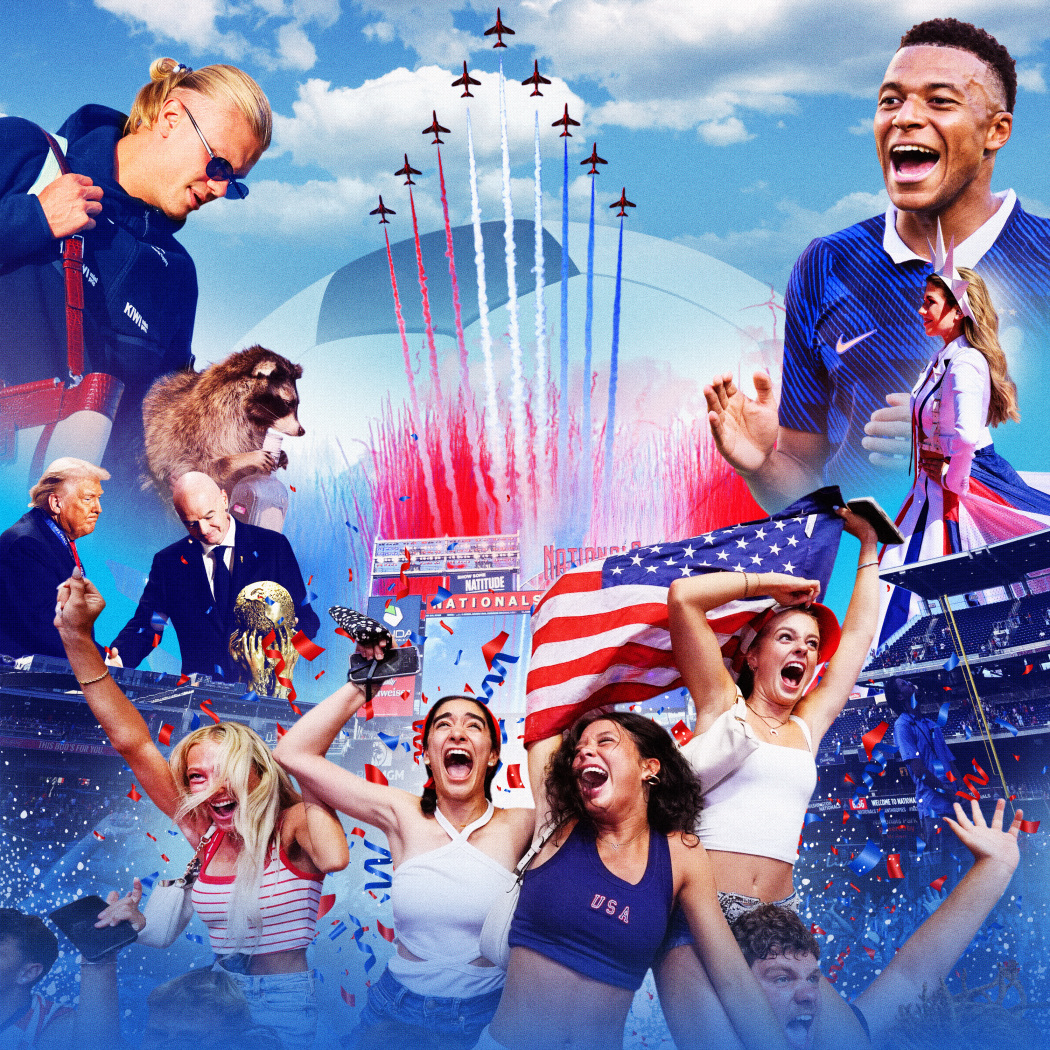
“On every single thing, the World Cup here has been amazing,” said Norway’s ponytailed striker Erling Haaland, who became so enamored with the States that he went home with several $750 taxidermied raccoons that he bought in Dallas.
“I like the Americans,” he added later. “I think they are kind of hilarious as well. I like the way they are.”
Such glowing reviews seemed improbable only a few weeks ago. During the run-up to the World Cup, fears over prohibitive ticket prices, chaotic transportation and restrictive immigration policies suggested the whole thing might turn into an unmitigated disaster. Concerns grew louder on the eve of the tournament, as thousands of tickets for the U.S. national team’s opening game remained unsold and a referee from Somalia was denied entry over vetting concerns. It all gave the distinct impression that America didn’t really care about how it was perceived by the wider world.
Yet fans flocked to the U.S. by the millions anyway—and what they found was an America that looked nothing like the one they’d seen on social media back home.
That most of these impressions were formed outside the tournament’s 104 matches helps explain why this World Cup hit harder than more traditional strains of soft power. Unlike the brief spectacle of a summer blockbuster or a Super Bowl halftime show, or even the carefully stage-managed hoopla of an Olympic games, the World Cup was an invitation to hunker down for a 39-day stay in America’s guest bedroom. Travelers from abroad had no choice but to experience real life.
And as it turns out, it wasn’t the state-of-the-art stadiums or 250th anniversary fireworks—or anything else the U.S. proudly set out to project to the rest of the world—that captivated visitors. The best advertisement for America was simply America itself.


Even before the tournament, a study by the nonprofit U.S. Travel Association found that 91% of visitors were glad they’d made the trip, and nearly two thirds returned home with a more favorable opinion of America. International travelers, it said, are America’s “best brand ambassadors.” All those videos of Dutch fans turning city blocks into bouncing orange waves or Scotland’s Tartan Army drinking Boston dry merely hammered the point home.
Once the tournament began, America quickly grasped what so many hosts had come to understand before: The moment the soccer starts, everything else recedes into the background.
Between us, we’ve now been to nine World Cups, and each time, the rhythms are the same.
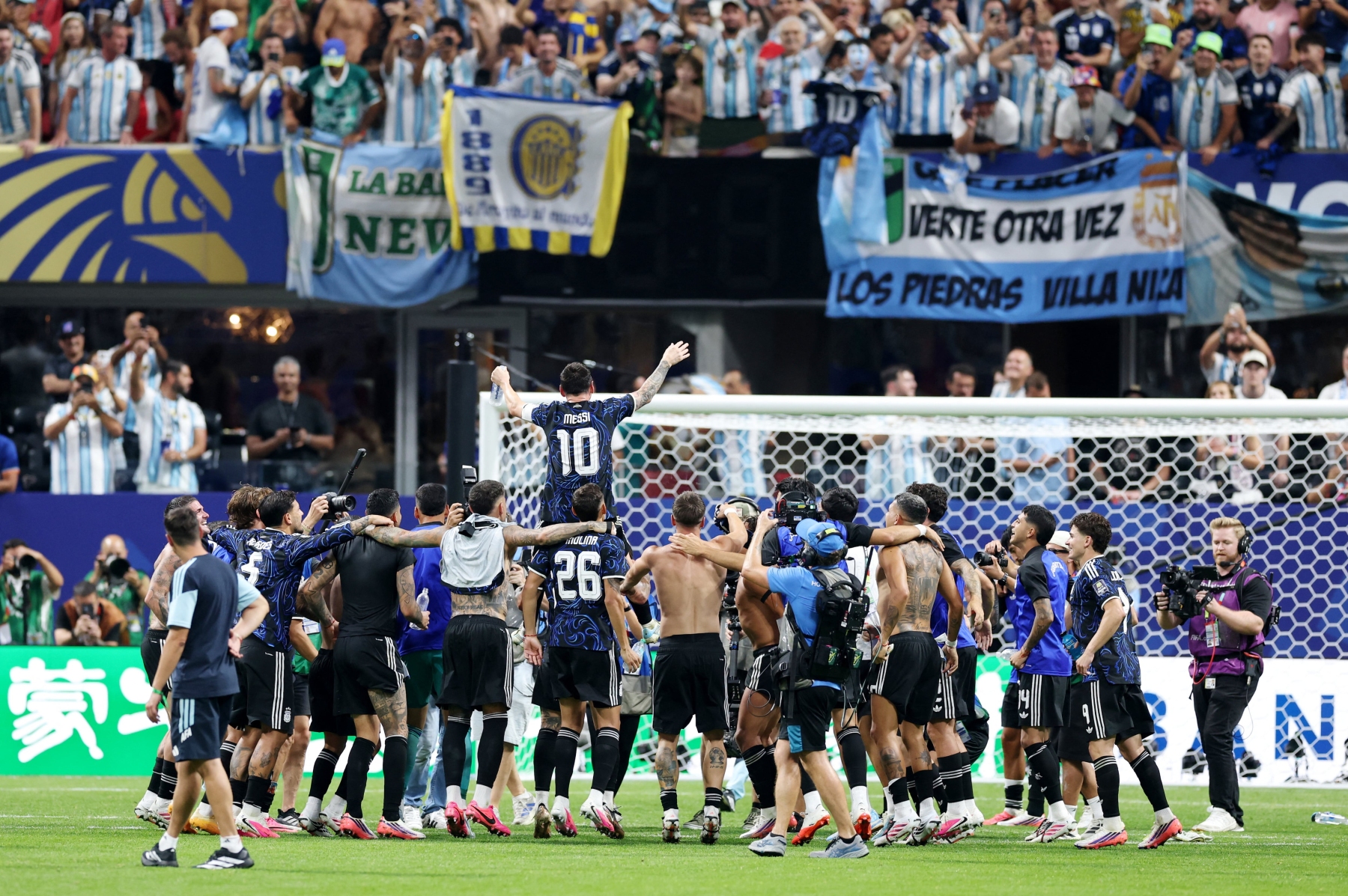
The 2022 tournament in Qatar was preceded by a decade of headlines about human rights abuses, and the 2018 World Cup took place in Vladimir Putin’s Russia. Yet the lasting images from both tournaments are of all-time greats such as Kylian Mbappé and Lionel Messi dancing on the field.
Back when the U.S. bid to co-host this tournament, alongside Mexico and Canada, President Trump was in his first term and no one could have imagined what the next eight years would bring—a standoff with Russia, a global pandemic, a war with Iran—or that Trump would be president again when the World Cup finally arrived. By the time the whole thing kicked off, the primary host was actively bombing one of the countries in Group G.
Sure enough, though, the longer the show went on, the more all the concerns about the cost, about geopolitics, and the sweltering conditions in Florida in July just melted away. FIFA, soccer’s world governing body, grew so confident that this World Cup would be a hit that internally, it upped its revenue projections on television rights, ticket sales and merchandise from $11 billion to $15 billion.
Yes, it was expensive—ludicrously expensive. And yes, it was hot—until you entered the multibillion-dollar, air-conditioned cathedrals of the NFL in places like Dallas, Atlanta and Los Angeles.
For the purists, there were soccer-specific venues in Toronto and Mexico City, which wouldn’t have looked out of place in Europe. But this wasn’t a World Cup for the purists—or for anyone convinced that air conditioning gives you colds. This was a planetary event for America to prove that its cultural hegemony could absorb the world’s most popular sport.
“You are speaking about the biggest power in the world,” FIFA president Gianni Infantino said the day before the World Cup started. “Of course, there are certain things that need to be taken into account.”


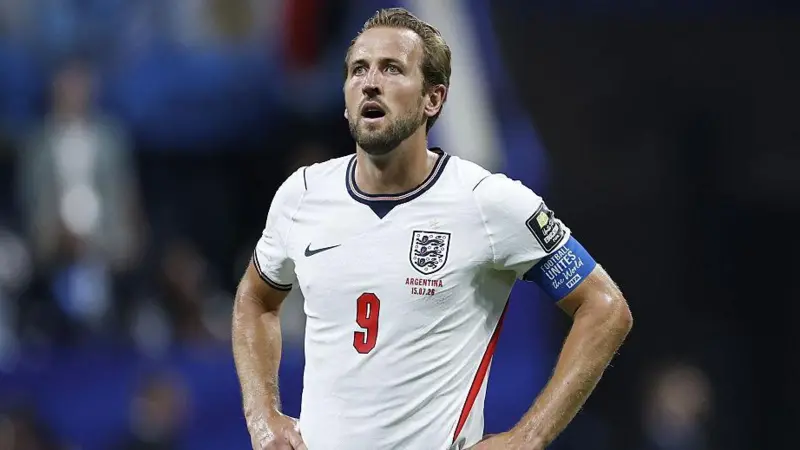
Even so, the experience of visiting fans was different from the xenophobic country they had been led to believe they were coming to. Here they found that their game-day traditions and rituals weren’t merely celebrated. In many cases, fans were treated better than at games in Europe or South America. Back home, soccer fans are often dismissed as violent thugs who require police escorts and can’t possibly be allowed to mix. At this World Cup, authorities didn’t bother segregating them, including at the potentially fractious semifinal between ancient enemies England and Argentina.
The United Kingdom Football Policing Unit, which works with local law enforcement, even praised America’s handling of England fans, whose history of hooliganism has routinely seen them viewed as troublemakers long after abandoning their fighting ways.
“It is great to see…the fans being policed according to their behavior, not an outdated reputation,” said chief constable Mark Roberts, head of the UKFPU.
In that sense, America earned its stripes as a soccer country—albeit one that still gets plenty of the terminology wrong. Never mind that a Gallup poll before the tournament found that more Americans consider themselves fans of figure skating than professional soccer. Within weeks, the ratings for the World Cup had shattered every record for soccer in this country.
The irony of America celebrating its 250th birthday with a gigantic soccerfest wasn’t lost on anyone who still considered the game more foreign than a bottle of rosé at lunch. But in many ways, the World Cup did a better job of highlighting what the world loves about America than any military flyover ever could.
While the 250th was a fraught celebration for those who see an insular, inward-looking nation sharply divided by politics and culture wars, the World Cup showed that these polarizing politics don’t always need to define America.
That’s not to say politics were completely absent. Though Trump kept himself conspicuously absent from the first 103 games of the tournament, he managed to make his presence felt in the unlikely arena of World Cup disciplinary matters. After the round of 32, his personal call to Infantino urging FIFA to review a one-match ban for Team USA’s top scorer, Folarin Balogun, after he received a red card, came across like ringing customer service.

Belgium’s outrage ahead of its match against the Americans verged on disbelief. “The federation does not defend itself, it does not defend the national team,” Belgium coach Rudi Garcia said at the time. “It defends football in general.”
Team USA’s 4-1 defeat soon ended that debate. But even if the country’s worst impulses still bubbled up, U.S. midfielder Tyler Adams described a sentiment around his team that might as well have summed up the whole tournament.
“The support was unbelievable,” he said. “In this moment, we let them down. But I think altogether people gravitated toward the team because we were relatable—we represented exactly what the U.S. was today.”
UP NEXT