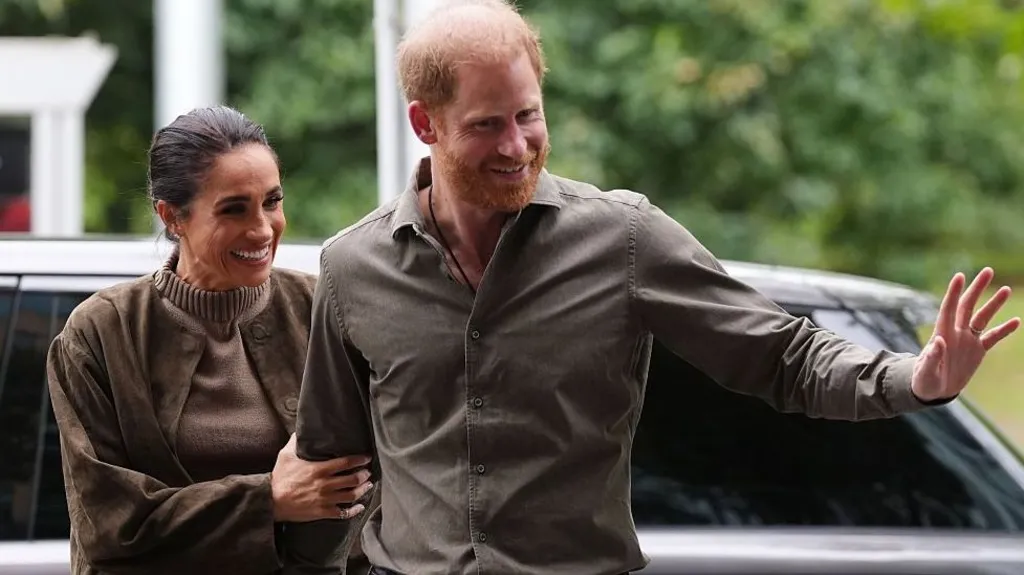

Issues that arose when Prince Harry and Meghan, Duchess of Sussex, stepped back from official duties in 2020, along with new challenges around concerns such as security, are front and centre after their return to Britain.
Public or private? Personal or officially royal?
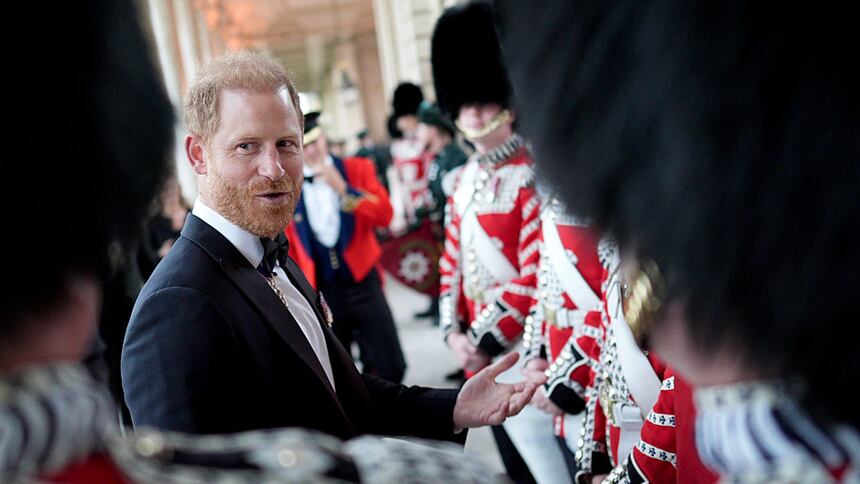
In ways, it can get confusing — there was Prince Harry, smiling for the cameras that often capture his comings and goings as he arrived at a charitable event Thursday night in London.
His attendance at an awards ceremony connected to the Invictus Games, which he founded for wounded and ill service members, garnered headlines. Media reports noted that it was his first appearance in public since he and Meghan, Duchess of Sussex, returned to the U.K. from California with their two children late last month.
Still, in the past few days, it has also been made clear — via a letter from Buckingham Palace — that he and Meghan remain non-working members of the Royal Family.
"In short, their position is akin to private citizens with commercial and charitable interests," the letter stated.
The missive from the palace and all the media attention it garnered in recent days are a stark reminder that issues that arose when Harry and Meghan stepped back from official duties in 2020 remain front and centre with their return to Britain.
Prince Harry and his wife Meghan are moving back to the United Kingdom with their children, Buckingham Palace has confirmed. The couple will remain non-working royals and live as private citizens.
The letter affirms that King Charles agrees with his late mother, Queen Elizabeth, that there can't be members of the Royal Family “who are half in and half out, especially in the 21st century,” Toronto-based royal historian Carolyn Harris said in an interview.
At the beginning of Elizabeth’s reign, she was “quite inclusive” in terms of bringing in members of her extended family to carry out royal duties, Harris said.
But times — and public expectations — have changed.
“In the current climate, when there's a lot of scrutiny of how taxpayers’ money is being spent … the emphasis now is on a small, streamlined Royal Family and for there to be a clear divide between those who are working members of the Royal Family and those who are not,” Harris said.
The letter — particularly the timing of its release — seemed to catch Harry and Meghan off guard, and was seen by some royal observers as a “brutal put-down” for the couple.

The line “has been drawn in the sand quite clearly,” Chandrika Kaul, a professor of modern history at the University of St. Andrews in Scotland, said in an interview.
“The palace … has issued statements very clearly saying that if Harry and Meghan wish to do whatever they wish to do in terms of charity work or other engagements, they're doing so in their own capacity as private individuals,” she said.
“They are not representing the Royal Family or the monarchy.”
Harris sees parallels between Harry and Meghan’s return to the U.K. and their departure six years ago.
“As in 2020, Harry and Meghan might have thought making a major life change is going to lead to certain decisions unfolding in their favour, and instead there are challenges.”
Six years ago, one initial challenge was whether Harry and Meghan might, as they seemed to hope, essentially be part-time working royals while also pursuing private, commercial interests. The answer from the Queen ultimately was a clear “No.”

This time, one challenge has been around security, an issue that has been of particular concern and spawned a previous, unsuccessful legal challenge from Harry. Now, however, the U.K. government committee that oversees tax-funded security for public figures and royalty will reconsider the level of police protection for the couple.
Earlier this week, word also emerged that Harry and Meghan’s children, Prince Archie, 7, and Princess Lilibet, 5, were changing schools, reportedly because of security concerns raised over traffic and the length of the commute from their home.
“Prince Harry may be hoping that a decision will be made in his favour regarding security now that they are back in the United Kingdom,” said Harris.
“But there is a long history of Harry and Meghan making a major life change, but the details are still to be arranged, and that can lead to tensions on all sides.”
Overall, says Kaul, attention and reaction to Harry and Meghan’s return has been “relatively muted.”
“It has been noticed and covered and discussed on national mainstream media, but … the popular media haven't gone berserk over the impact.”
She also sees the potential for Harry to carve out a new identity now that he’s back in the U.K.
“There has always been and there continues to be a great deal of public affection and regard for Harry. I don't think that's ever gone away.”
The King and AI

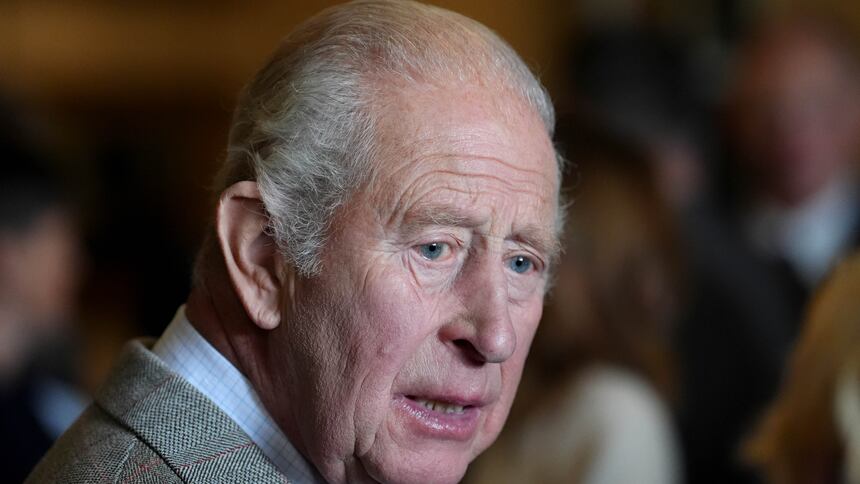
Inside the restored 18th-century Palladian country house that serves as the home of his charitable foundation, King Charles signalled both the hopes and risks that surround a very 21st-century concern.
“AI is already showing its immense capacity to improve and save life — for example, in the field of life sciences and medicine,” Charles told leaders of some of the world’s leading AI firms who accepted his invitation to come to Dumfries House in southwestern Scotland on Thursday.
“Yet, those who have created these technologies are now increasingly warning that AI risks developing darker capacities — perhaps even to take life. In this regard, if I may say so, there seems urgency in adequately considering the existential dangers of such technologies falling into the wrong hands, and being used in potentially catastrophic ways.
“Surely, we need sufficient means of control before it is all too late?”
Charles’s convening of AI leaders is in keeping with both longstanding interests the monarchy has had in technology and his own efforts to bring people together on issues of the day.
“There's always these intersections between royalty and new technology, whether it's Queen Victoria embracing photography and then right at the end of her reign, film, or Queen Elizabeth II embracing video conferencing during the COVID-19 pandemic,” Harris said.
King Charles hosted executives from AI companies OpenAI and Anthropic, as well as chipmaker Nvidia and the Google DeepMind AI research laboratory, in Scotland, and urged them to apply safeguards to their products 'before it is all too late.'
But there was more than that at play on Thursday, Harris suggested.
“For King Charles III, it's clear that he sees his role as King is to bring people together in the hope that solutions to complicated issues may be found.”
Charles does that from a unique position, Harris suggested.
“It's part of that unifying role of the monarch, the ability to bring people together. Anyone who receives an invitation to Buckingham Palace is likely to accept.”
Kaul also saw the focus on AI as a reflection of some of Charles’s longstanding interests and perspectives.
“It testifies to the King's lifelong commitment not just to technology, but to this kind of harmonious balance between nature and human beings and his deep interest in civilization and the continuation of culture.”

Charles’s actions also reflected an effort to bring people together in a way that differed from how his mother might have approached issues of the day.
“I think there is a greater sense that it is Charles who's driving the agenda,” Kaul said.
“The Queen's way of handling it was always to clearly weigh up the issues, but … particularly in her later years, [she] seemed to … put the royal mark of approval on an agenda rather than necessarily take a leading role in pushing an item onto the agenda.”
In his speech on Thursday, Charles posed two questions:
“First, how can we harness the benefits of AI, with safety at its heart? And, second, how can we build international co-operation and consensus to achieve this, so no nation is left behind, but the human race is left in place?”
Humanity, he said, “must remain sacred.”
“The decisions taken at this formative time will shape the world inherited by future generations. And so, the task before you is not merely to advance technology, but to ensure that it remains firmly in the service of humanity, community and the natural world. As we embrace what is new, we must not lose what is timeless.”
Coming together to prevent suicide

Prince William was doing some convening of his own the other day on one of his key charitable priorities when he met with star athletes and leaders of sports organizations.
Along with Catherine, Princess of Wales, William was on hand at the Everton Football Club to launch a suicide prevention initiative.
“Sport creates belonging. It creates identity. It creates connection. And those connections matter,” William said.
“When somebody is struggling, often it is not a professional who first notices. It is a friend. A coach. A colleague. A teammate. Someone who sees a change. Someone who asks if everything is all right. Someone who starts a conversation. And that conversation could make all the difference.”
The suicide prevention toolkit launched by William aims to help people across sport have “the confidence to recognize warning signs, start supportive conversations and connect individuals with help before they reach crisis point,” Kensington Palace said.
In the initiative, Harris saw a reflection of the interests of several members of the Royal Family.
“We see a bit of Prince Philip's influence in terms of the interest in sport, but also William and Catherine, and at one time Prince Harry as well, were all very concerned with mental health and mental health initiatives.”
There is also the concern William’s mother, Diana, Princess of Wales, had in marginalized people and making “them feel loved and accepted,” Harris said, along with the concern his father, King Charles, has had in youth and opportunities for them.
A brother's claim and a palace response

The response came quickly, by royal standards.
Not long after the first headlines emerged online Wednesday about claims the brother of the late Diana, Princess of Wales, is making in a book to be released this coming week, Buckingham Palace had a statement of its own.
In a published excerpt of Swan Song: Diana, My Sister, Charles Spencer claims that King Charles said his former wife would soon be forgotten after her death.
Spencer says he told Charles that Diana would not have wanted their sons, William and Harry, then 15 and 12, to walk behind her coffin in the funeral procession. He claims Charles told him: "Rest assured, we'll forget her soon enough." He also accuses Charles of having "contempt" for his ex-wife.
The palace responded later Wednesday with a statement of its own.
"While we do not comment on books as a matter of principle, His Majesty is mindful that the pain of fraternal grief can cloud reason, affect judgment and colour memory in ways others do not recognize, even many years after such a loss," it said.

Harris sees parallels in that statement to another high-profile reaction from the palace.
“In common with Queen Elizabeth II's statement that ‘recollections may vary’ after Harry and Meghan were interviewed by Oprah Winfrey, King Charles III is refusing to allow Earl Spencer to have the last word on circumstances concerning the Royal Family,” she said.
“The King has his own memories of the days following Diana's death and they are not the same as those of Earl Spencer.”
Diana died after a car crash in Paris in 1997.
Nearly 30 years after her death, she continues to captivate and draw headlines, and says Harris, her legacy continues to be debated and contested.
“Diana combined glamour with vulnerability and people from a variety of social and cultural backgrounds saw themselves in aspects of her experiences even though she was born into the aristocracy and married a prince,” said Harris.
“Recent films, television series, plays and novels have revived interest in Diana for a new generation who remember the princess through popular culture portrayals rather than historical events.”
Royally quotable
"The shock of witnessing these fires around the world in recent months reminds us forcibly of the mounting pressures that prolonged heat and drought are placing upon our precious Earth.”
— King Charles, in a message where he expressed his admiration for those who helped tackle wildfires across the U.K. this summer.

Royal reads
Enslaved African people were seared with hot metal brands bearing the royal crown, according to research by historians who have documented the monarchy’s centuries-long involvement in Britain’s slave trade. [The Guardian]
Prince William has launched a community fund to revive a village in southwestern England. [The Independent]
The Princess of Wales visited the cancer hospital where she was treated for the illness and praised the "incredible" care she received. [Sky News]
The Duchess of Edinburgh tried her hand at polishing gemstones at a local family jewellery business in Zambia on the second day of her tour of the African country. [Daily Mail]
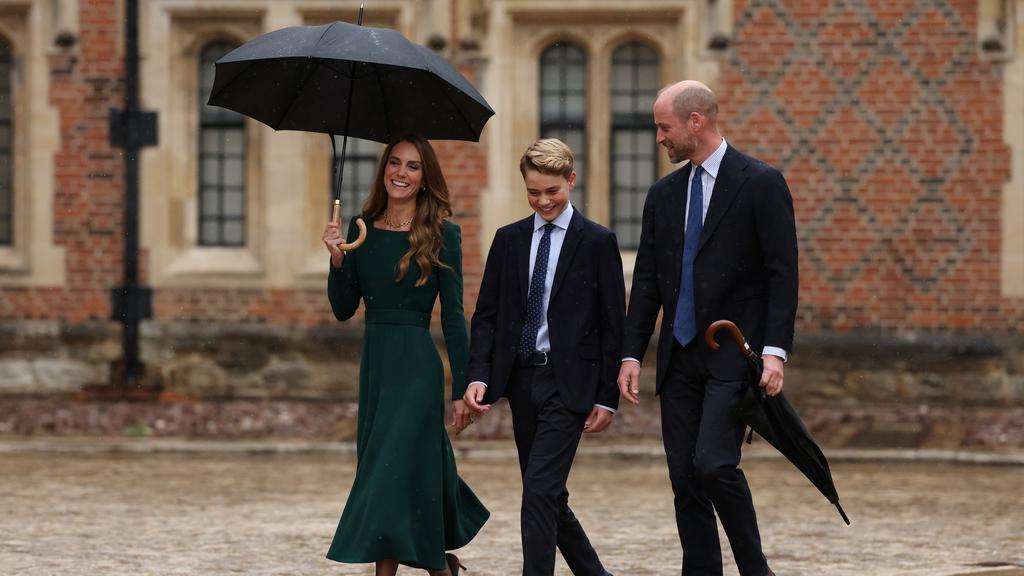
Prince George posed for a portrait in his new school uniform after arriving for his first day at Eton College accompanied by his proud parents, the Prince and Princess of Wales. [Daily Mail]
Prince Harry and Meghan's highly publicized return to England got the full Saturday Night Live UK treatment — and in true British fashion, the welcome was served with a distinctly chilly reception. [CBC]
Lost or long-discarded items revealing glimpses of the behind-the-scenes life of Buckingham Palace staff over decades have been uncovered during the restoration of the monarchy’s HQ. [The Guardian]

With files from The Associated Press