
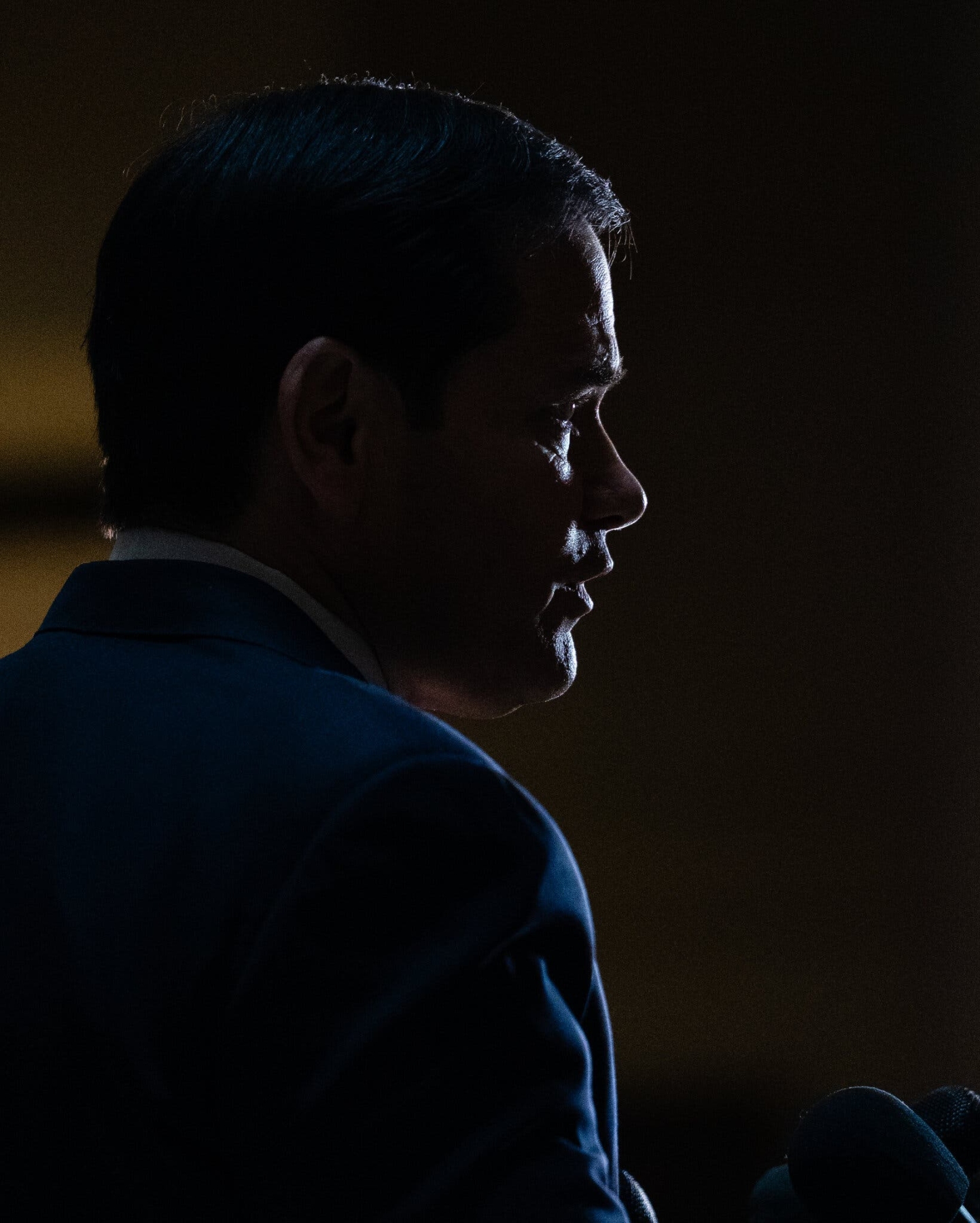
The secretary of state effectively controls Venezuela’s finances, the distribution of its natural resources and its government. His grip on the country is a vivid manifestation of American power in the Trump era.
Tyler Pager and Anatoly Kurmanaev
President Trump was sitting in the Oval Office earlier this year with Secretary of State Marco Rubio when an idea came to him.
Maybe he should dispatch Mr. Rubio permanently to Caracas, the Venezuelan capital, where U.S. commandos had carried out the proudest foreign policy achievement of Mr. Trump’s second term: the capture of Nicolás Maduro, the country’s president.
Mr. Rubio could be the next leader of Venezuela, Mr. Trump suggested. And while the president’s aides say he was joking — and that he frequently teases Mr. Rubio about an overseas assignment — the fact is that Mr. Rubio does not need to move to Caracas.
He already runs Venezuela from Washington.
In the six months since U.S. forces blew open Mr. Maduro’s bedroom door and snatched him in the dead of night, Mr. Rubio has become the de facto viceroy of Venezuela, holding sway over a sovereign nation in a way that no American official has since L. Paul Bremer III arrived in Baghdad in 2003 to run U.S.-occupied Iraq.