Donald Trump has beet hit with a surprising offer potentially worth $1 trillion. The only thing standing in the way is a very shaky past.
Afghanistan’s Taliban rulers are offering American companies access to the country’s vast mineral wealth as they plead with Donald Trump to ease sanctions.
The overture comes five years after the Islamist movement retook Afghanistan and watched the final fleet of American forces leave following two decades of war.
Scenes of the nightmarish final day at the airport, where hundreds of Afghani civilians tried to grip onto departing US army jets, are still fresh in the minds of those suffering under oppressive conditions.
It appears the Taliban is now looking to smooth things over somewhat in an attempt to see billions in frozen assets released and potentially reopen the US embassy in Kabul.
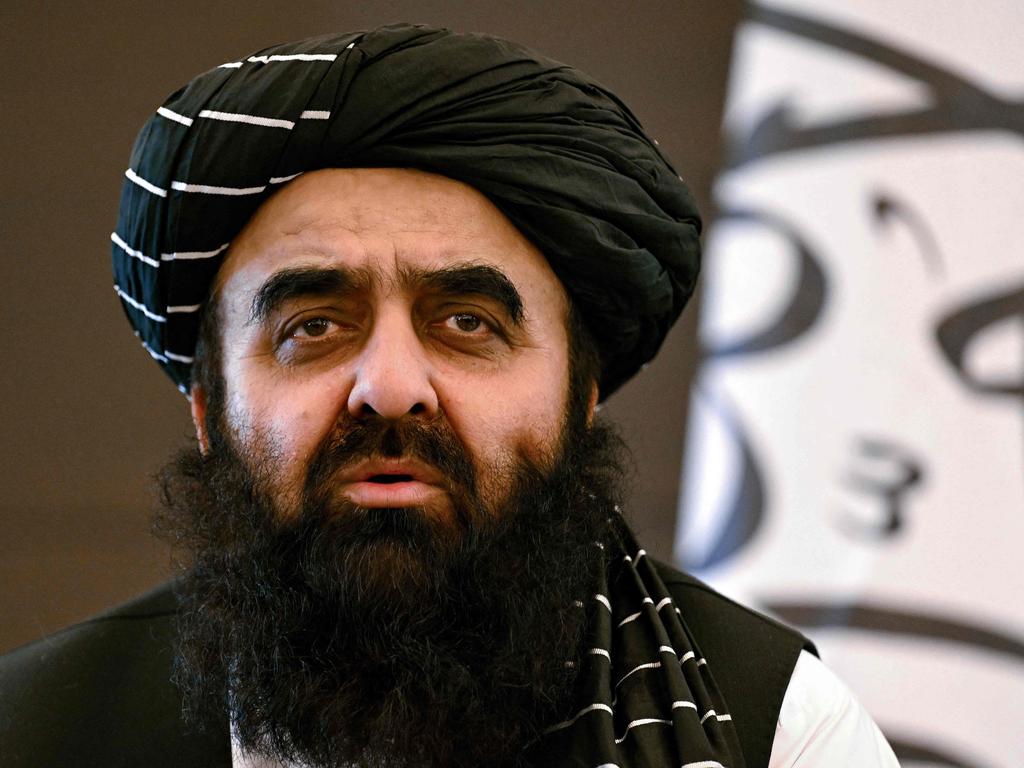
This week, Taliban foreign minister Amir Khan Muttaqi told the Financial Times that Afghanistan would “absolutely” welcome US investment in mining, infrastructure, agriculture and trade.
“Relations between Afghanistan and the United States should not be assessed through the lens of the past 20 years of war, but rather on the basis of future co-operation,” he said.
“Our economic policy is open.”
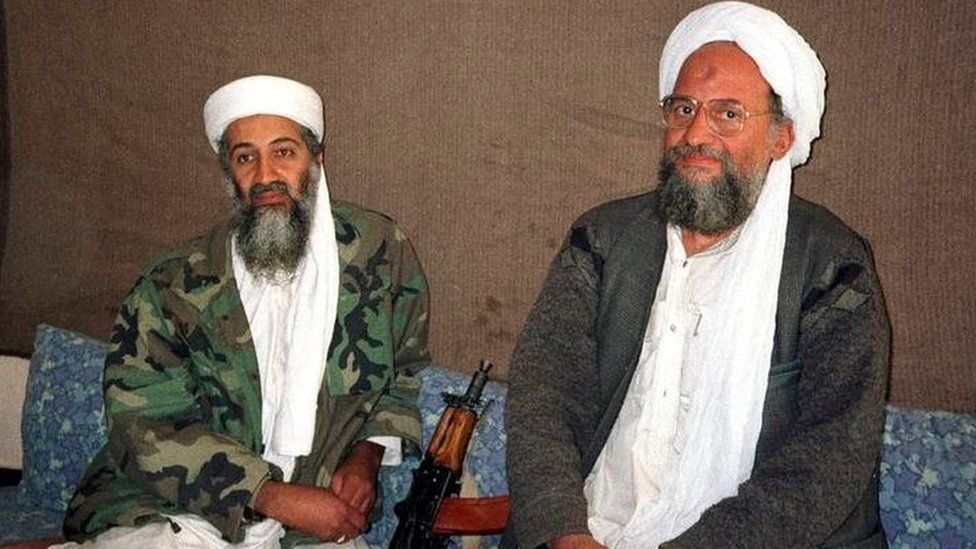
The pitch is a remarkable change in tone from the movement that fought American troops and sheltered al-Qaeda leader Osama bin Laden before the US-led invasion following the September 11 attacks. More than 2400 American service members were killed during the war.
Mr Trump’s first administration negotiated the 2020 Doha agreement, which committed the US to withdrawing its forces and contemplated future economic co-operation with Afghanistan.
When the Western-backed government collapsed and desperate Afghans crowded Kabul airport trying to escape, then-President Joe Biden was blamed for what Trump described as “the most embarrassing moment in the history of our country”.
The US, like Australia, still refuses recognise the Taliban as Afghanistan’s legitimate government.


Mr Trump has so far shown little interest in accepting a deal put forward by Taliban powerbrokers. He has instead demanded the return of Bagram Airfield, the sprawling former centre of US military operations north of Kabul.
“If Afghanistan doesn’t give Bagram Airbase back to those that built it, the United States of America, BAD THINGS ARE GOING TO HAPPEN!!!” Mr Trump warned last year.
The Taliban has strongly rejected any renewed American military presence on its claimed soil.
“All military and civilian facilities in Afghanistan, including Bagram, are national assets of Afghanistan,” Mr Muttaqi said.
He nevertheless encouraged Washington to reopen its abandoned embassy, saying the Taliban had “ensured its security … rebuilt the road and planted new trees”.
“The area now looks very vibrant and attractive,” he said.

The trillion-dollar lure
At the centre of the Taliban’s offer is Afghanistan’s enormous but largely undeveloped mineral potential. US and Afghan geological surveys have identified deposits of copper, iron ore, cobalt, gold, lithium, niobium and other valuable materials deep underneath the mountainous landscape.
The raw resources have frequently been valued at a whopping $1 trillion ($A1.4 trillion).
Afghanistan is landlocked and lacks much of the power, transport and industrial infrastructure required for mining on that scale. Investors would also have to navigate sanctions, political uncertainty and questions over contracts negotiated with an unrecognised government.
The Taliban says it has announced more than $7 billion ($A9.8 billion) in mining investments since returning to power, involving countries including China and Iran. Those announcements do not necessarily mean the full amount has been spent or that the projects are operational.
The approach may nevertheless appeal to an administration already focused on securing critical minerals and reducing American reliance on China. Mr Trump signed a major minerals agreement with Ukraine in 2025 and has increasingly treated access to resources as a central part of US foreign policy.
China already has a big head start in Afghanistan, including longstanding interests in the country’s copper and oil resources.

The mineral offer sits alongside the Taliban’s campaign to have international sanctions lifted and Afghanistan’s foreign reserves returned.
Mr Muttaqi argued that the sanctions “did not achieve their intended objectives”.
When the Taliban seized power in 2021, Afghanistan’s central bank held about $9.5 billion ($A13.3 billion) in reserves outside the country.
The Biden administration later transferred $US3.5 billion into the Switzerland-based Afghan Fund. The money, now worth more than $US4 billion after earning interest, is intended to support Afghanistan’s financial stability without being handed directly to the Taliban.
“No individual, government or institution should use the assets of the Afghan people as a tool of political pressure,” Mr Muttaqi said.
He said Kabul was discussing the money with the relevant governments.
The United Nations also imposes asset freezes, travel bans and an arms embargo on listed Taliban-linked figures and organisations. Mr Muttaqi himself has been on the UN sanctions list since 2001.

The Taliban’s surprise appeal to Washington comes as its government attempts to break out of the isolation that followed its takeover.
Russia became the first country to formally recognise the Taliban government in 2025 and signed a military co-operation agreement with Kabul in May. China, India, Iran, Qatar and several Central Asian states have also received Taliban officials or established working relationships with the regime.
In June, Taliban representatives travelled to Brussels for talks with European officials about diplomatic services and returning Afghan migrants. The meeting did not amount to formal recognition, but it did mark another step into the international system.
The growing engagement has naturally alarmed human rights advocates around the globe.
The Taliban has barred girls from attending school beyond the sixth grade and excluded women from universities, large sections of employment and much of public life. There are an estimated 2.4 million Afghan girls are now shut out of secondary education.
In July 2025, the International Criminal Court issued arrest warrants for Taliban supreme leader Hibatullah Akhundzada and chief justice Abdul Hakim Haqqani over the alleged persecution of women and girls as a crime against humanity.
UN experts warned last month that “there should be no moves to normalise the Taliban de facto authorities, including by accepting diplomats or holding meetings in capitals, without demonstrated, measurable progress against human rights benchmarks, particularly for women and girls”.
Afghanistan’s humanitarian position also remains extremely dire. The United Nations said in August that about 14 million people were facing acute hunger, while severe child malnutrition has reached critical levels in large parts of the country.