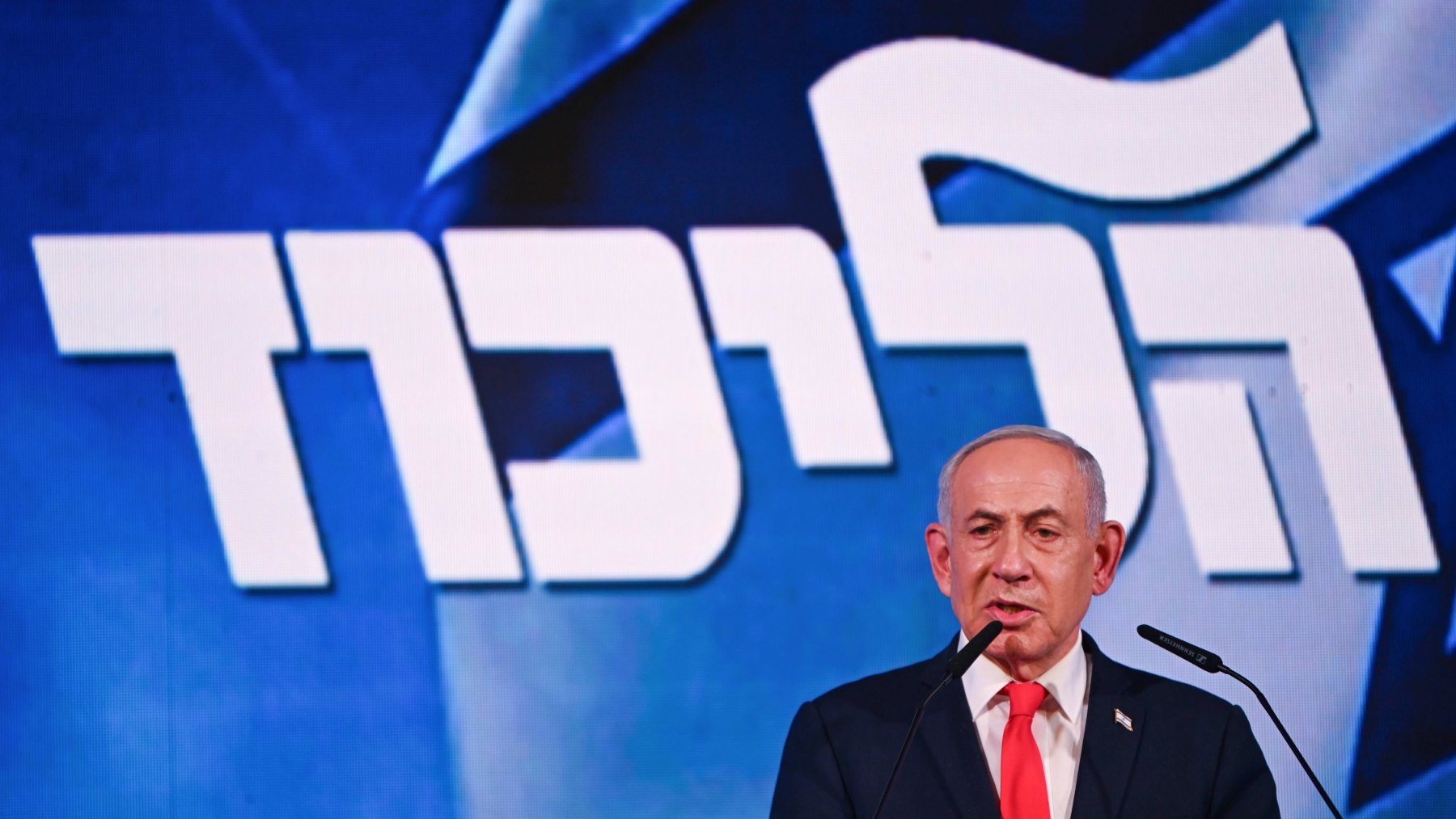
A confident and upbeat Netanyahu struck a near-triumphant tone when he addressed supporters at the Likud party’s headquarters in Jerusalem in the early hours of Wednesday.
Likud was “the largest party” in the elections, he proclaimed, listing Israel’s military achievements since the October 7 terror attacks three years ago and calling on his rivals to now rally behind him.
“We must establish a strong, right-wing, nationalist government,” he said, almost acting as if he had already been handed the mandate to stay on as prime minister.
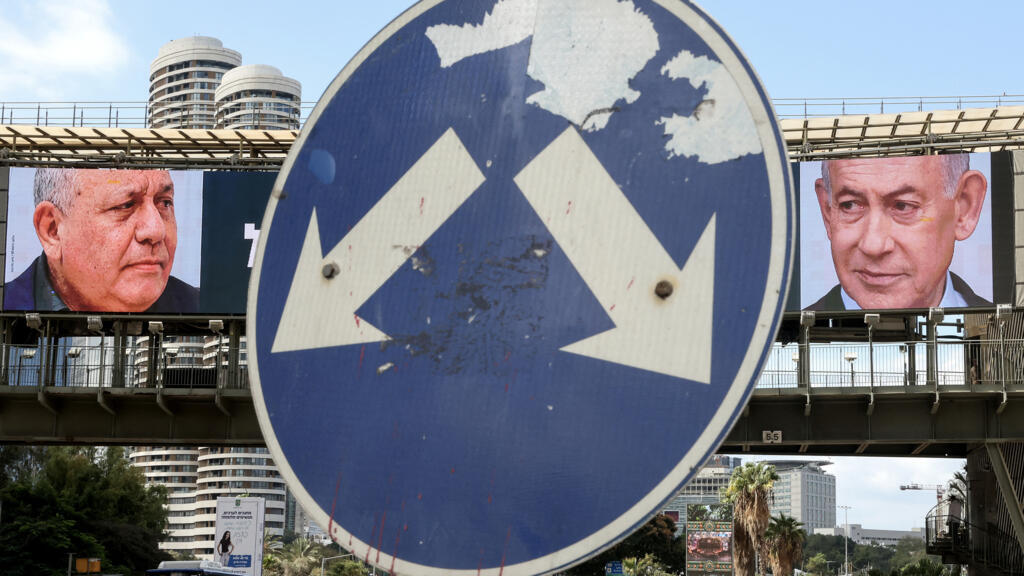
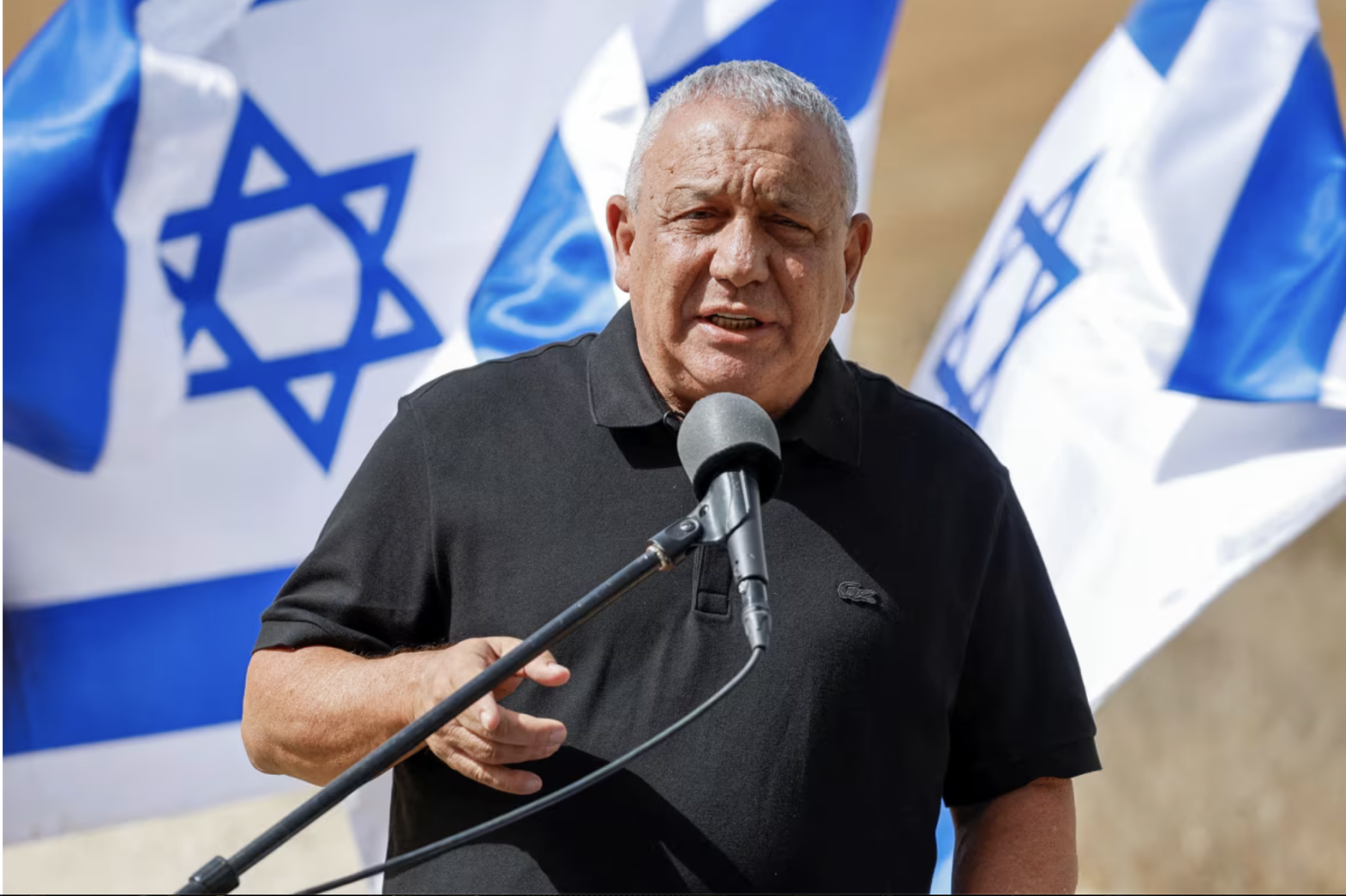
But the vote-count was far from over, and Netanyahu was not the only one vowing to form a government. In Tel Aviv, the incumbent’s main opponent – former general Eisenkot – declared victory for “Israel’s Zionist national majority”.
Yet neither of the two frontrunners were en route for a parliamentary majority, or the 61 of 120 seats needed to take control of the Knesset. With over 85 percent of the votes counted, Netanyahu and his allies hovered around the 53 percent mark while Eisenkot’s “Change” bloc was just under 50.
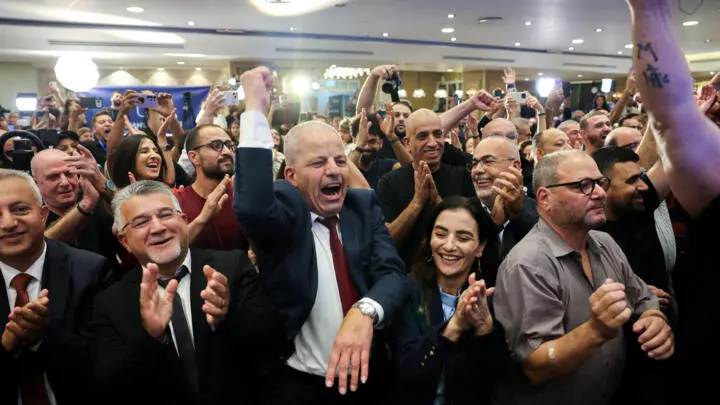
Instead, the biggest upset of the election came from an unexpected corner: Israel’s Arab parties, the Joint List and Ra’am (the United Arab List). Thanks to the highest voter turnout in almost three decades – more than 77 percent – they are currently projected to send some 19 lawmakers to parliament.
“We’ll translate this electoral power into an influential political force,” Ra’am jubilant party chief Mansour Abbas exclaimed as the historic results trickled in. “We’re here – not on the sidelines.”
Arab Israelis, who are mainly of Palestinian descent, make up around 21 percent of the population, and typically record a much lower voter turnout than other Israelis. In 2022 – the last election held in Israel before the October 7 attacks – the Arab bloc won just 10 seats.
Arab Israelis have ‘woken up’
“Finally, Palestinians have turned out to vote – we’ve been waiting 30 years for this!” said Sylvaine Bulle, an expert on Israel and the Israeli-Palestinian conflict at the School for Advanced Studies in the Social Sciences (EHESS) in Paris.
“Given their enormous success, it means they believe the situation is extremely serious,” she said. “They've woken up, obviously in response to Gaza, but above all to the occupied West Bank,” she continued, referring to the Israeli settlers' ramped-up violence against Palestinians and threats by Netanyahu’s far-right coalition partners to formally annex the territory.
Netanyahu appeared worried that the Arab parties’ successes could potentially pose him problems, and sent out a stark warning to Eisenkot in case he considered working with them.
“We must not endanger Israel and establish a government that relies on anti-Zionist Arab parties,” he said.
But for Eisenkot, it could be anything but easy to join forces with the Arab parties – not least because it could alienate Jewish voters, especially on the right, by doing so.
“You cannot simply add their seats,” Bulle said. “If it was that easy, we would already have a government. It’s much more complicated than that.”
Another option, she said, could be for Eisenkot to form a minority government, relying on the Arab parties’ support in parliament rather than bringing them into his coalition.
But that too would require delicate negotiations, she said, and an agreement on a common political programme, “potentially including the end of the occupation” of the West Bank – an extremely sensitive matter in Israel.
‘Equals’
While the moderate islamist Ra’am, which was in coalition with Naftali Bennet’s coalition in 2021, has signalled it could potentially work with Eisenkot, talks with Joint List, an alliance of Arab nationalist and left-wing parties, could prove much more difficult.
This is because Eisenkot has laid down four conditions for cooperation: recognising Israel as a Jewish and democratic state, accepting the principles of its declaration of independence, extending conscription also to Palestinian citizens of Israel and denouncing Hamas as a terrorist group.
On election night, Amjad Shbita, the head of the biggest party in the Joint List coalition, said Eisenkot was in no position to try to dictate the terms of a potential cooperation.
“Laying down the conditions won’t work with the Joint List,” he said. “We will negotiate as equals.”
On Wednesday, the calls for Eisenkot to open up more to the Arab parties in a bid to oust Netanyahu had already begun.
Yair Golan, the head of Israel’s main left-wing party, was first out.
“We must no longer accept Netanyahu’s racist division between Jewish voters and Arab voters,” he said in a post on X. “We have a responsibility. And we have an opportunity to form a government of change in partnership with Israel’s Arab citizens.”
But turning that ambition into reality could take time.
With the final results still pending, both sides face the challenge of cobbling together a majority, or at least a viable minority government.
And right now, the Arab parties could hold the key – for Eisenkot at least.