
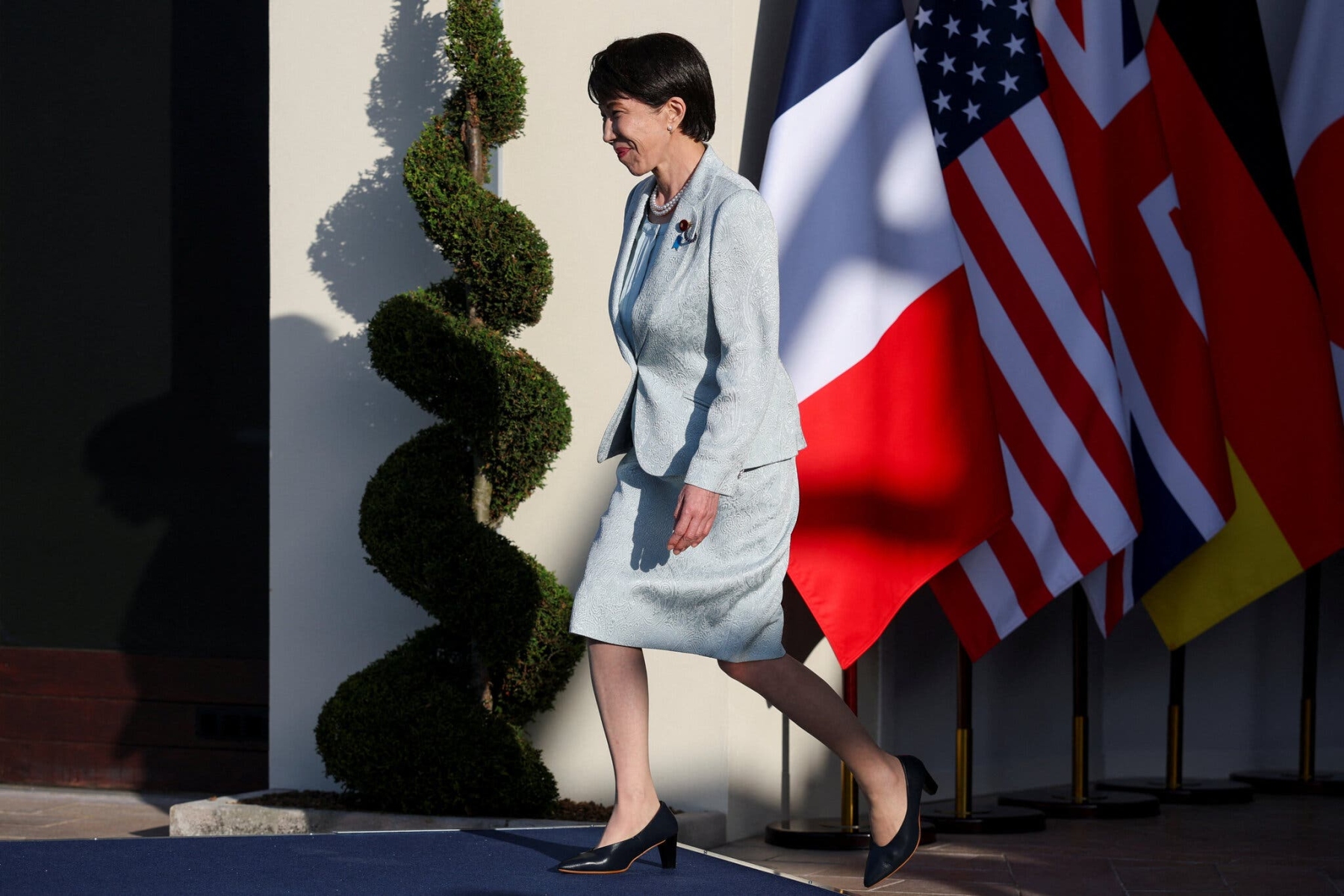
Facing threats from Russia and China, Prime Minister Sanae Takaichi is turning to help from Western allies in forming a centralized agency.
Javier C. Hernández, Reporting from Tokyo
Japan is undertaking an ambitious effort to build a centralized intelligence agency for the first time since World War II, and it is turning to partners in the West for help.
Japanese leaders have privately approached partners such as the United States, Australia and Germany in recent months for advice on technology, staffing and priorities, according to interviews with officials from Japan and elsewhere. The conversations have not been previously reported.
On Sunday, The New York Times reported that dozens of Russian spies have moved to Japan in recent years, as the country became a key focus of the Kremlin’s effort to buy weapon components, ship them to Russia and evade sanctions. Foreign officials have warned Japan about this effort, but the country has been slow to respond.
Japan’s intelligence system has long been fragmented, with defense officials, diplomats, the police and others collecting and analyzing information without sharing intelligence across departments. That has left the country especially vulnerable to espionage and foreign interference, experts say.
Creating a domestic intelligence agency is a pillar of Prime Minister Sanae Takaichi’s efforts to shed restrictions on defense and security imposed on Japan after the war, as Japan faces multiplying threats from China, Russia and North Korea.
Ms. Takaichi, a hawkish leader who has presented a vision of a “strong and prosperous” Japan, has already reversed bans on weapons exports and pushed forward with Japan’s biggest defense buildup in the postwar era.
Now she wants Japan to do more to protect state secrets and vital technologies and to guard against foreign influence operations — particularly those led by China.
China has in recent years created sites disguised as Japanese-language news channels to spread pro-Beijing disinformation, according to researchers at the Citizen Lab, a cybersecurity research group.

Japanese officials feel the country’s intelligence capabilities have “been frozen in time for decades,” said Andrew Shearer, Australia’s ambassador to Japan, who has offered informal advice to Ms. Takaichi’s government.
“It’s a big thing that the prime minister has chosen to make it a priority,” he said, “and that she is investing the political capital to get it done.”
Mr. Shearer, who was Australia’s director general of national intelligence from 2020 until last December, has been a particularly influential voice. When Ms. Takaichi visited Canberra in May, she thanked Australia’s prime minister, Anthony Albanese, for appointing an ambassador with a background in intelligence, according to two officials briefed on the visit.
The New York Times has learned that in recent months:
Intelligence officials from the United States, Japan’s main security ally, have offered input on cyberdefense systems and methods of countering industrial espionage, according to two people familiar with the conversations.
The Americans also have weighed in on ways to strengthen scrutiny of foreign investments and agents operating in Japan, the people said.
The head of Germany’s foreign intelligence service, known as the BND, recently visited Tokyo, in part to discuss Japan’s new agency and how to improve intelligence sharing between the two countries, according to two people briefed on the visit.
Australian officials have advised on technology as well as strategies for getting disparate ministries to operate as a team and share information, according to Mr. Shearer.
The Japanese government declined to comment on whether it was seeking help from foreign officials as it establishes the agency, saying only that it “maintains close cooperation with counterparts in relevant countries on a regular basis.”
Memories of Imperial Japan
Ms. Takaichi’s plans, which would centralize intelligence-gathering under the prime minister and encourage sharing across departments, have drawn criticism, including from China, which has accused her of militarism.
In Japan, some lawmakers and activists say the agency lacks sufficient oversight and runs counter to the country’s pacifist ideals. Memories of Imperial Japan still linger, including the reign of the police and intelligence force known as Tokko, which targeted critics of the government in the run-up to World War II.
Mizuho Fukushima, an opposition lawmaker in Parliament, said the lack of a stand-alone intelligence agency over the past eight decades was a choice “rooted in Japan’s commitment to being a peaceful nation that renounces war, and the result of lessons learned from its own history.”
The new agency, she said, “infringes upon the right to privacy and other rights and paves the way for a surveillance society.”

Ms. Takaichi and her allies have defended the agency, part of a slate of proposed changes to Japan’s security system. Ms. Takaichi wants Japan to strengthen its counterespionage laws, and she has also expressed support for the idea of creating a dedicated foreign intelligence service akin to the C.I.A. Japan is one of only a few world powers without such an agency.
The new agency, with a budget of about $407 million, is expected to be up and running by December, and is likely to have a staff of hundreds of people initially, including software engineers, cybersecurity analysts and overseas liaisons. The agency plans to hold exams for recruits next year, according to Japanese news outlets.
The agency will serve as the core of intelligence gathering and analysis in Japan. It will help coordinate the work of about 33,000 individuals involved in intelligence across Japan’s government, including in the police, the defense ministry and the foreign affairs ministry.
Japan already has a cabinet office that is supposed to coordinate the flow of information, but that office lacks the authority to force agencies to share intelligence briefs. As part of Ms. Takaichi’s changes, Japan will also establish a separate intelligence council, which will serve as a central command center, chaired by the prime minister.
In a statement, a spokesperson for Japan’s cabinet secretariat said the intelligence agency was necessary in part to help counter the theft of classified information through cyberattacks and the spread of disinformation aimed at influencing policy. The spokesman said the government was working to assess “operations by foreign entities and ensure information security across both the public and private sector.”
A Spy Paradise
Japan’s intelligence troubles can be traced to the aftermath of World War II, when its once-formidable security system was dismantled under the American-led occupation of Japan. Japan grew dependent on the Americans for foreign intelligence. There was little appetite at home for an independent spy agency because of the excesses of the Tokko.
Japan became known in the ensuing decades as a spy paradise, a place where security officials were siloed; politicians, academics and journalists were easily corrupted; and foreign agents could operate with impunity.
In 2013, Shinzo Abe, Japan’s longest-serving prime minister, set out to reverse many World War II-era restrictions on defense and intelligence-gathering in Japan. Mr. Abe, who was assassinated in 2022, after he had left office, was a mentor to Ms. Takaichi. As hard-line conservatives in the ruling Liberal Democratic Party, they shared the view that Japan had spent too much time apologizing for wartime atrocities instead of rebuilding its security forces.
Mr. Abe established an American-style National Security Council and secretariat, and he championed a national secrets law to help counter Japan’s reputation for leaks. He wanted Japan to function as a “normal” nation, capable of protecting itself and playing a more

Ms. Takaichi is building on Mr. Abe’s vision. Her government has also created a committee on foreign investment, modeled on a similar body in the United States, to crack down on the theft of sensitive technologies.
Ms. Takaichi’s success, analysts said, will depend on whether she is able to break down barriers within Japanese bureaucracy and deploy artificial intelligence and other technologies in the analysis and gathering of intelligence.
“This is a giant step in the direction of having a fully integrated and robust intelligence community,” said Richard Samuels, a professor of political science at the Massachusetts Institute of Technology, who has written a history of Japan’s intelligence community. “But Japan is not an intelligence superpower yet, and they know that.”
Kiuko Notoya contributed reporting from Tokyo.
Javier C. Hernández is the Tokyo bureau chief for The Times, leading coverage of Japan and the region. He has reported from Asia for much of the past decade, previously serving as China correspondent in Beijing.